
🌎 Living in Brazil: Part 1 – First Impressions
After 62 years in the United States, I’ve made the leap to Brazil. Moving here has been a huge change, and I thought it would be fun to share some of my experiences in a multi‑part series. My goal isn’t just to say “the beaches are gorgeous” or “the food is incredible” (though both are absolutely true and deserve their own posts). Instead, I want to paint a picture of what daily life feels like, what you can expect, and how I found myself here.
For this first piece, I’ll focus on Rio de Janeiro, since that’s where I live. Brazil is vast—the largest country in South America—and in many ways it rivals the United States in scale and population. Yet, despite its size, each region has its own rhythm, culture, and way of life.
Rio, with its dramatic coastline and bustling energy, is unlike anywhere I’ve lived before. The city pulses with contrasts: modern skyscrapers against colonial architecture, samba rhythms echoing through neighborhoods, and the ever‑present backdrop of mountains meeting the sea. It’s a place where every day errands feel like small adventures, and where the pace of life invites you to slow down and take it all in.
This series will dive into the details—food, beaches, traditions, and the quirks of daily living—but for now, I just want to set the stage. Brazil isn’t just a destination; it’s a lifestyle shift, and I’m excited to share what that feels like from the inside.
Language: The First Rule of Thumb
If you plan to visit or move to Brazil, the first rule of thumb is the language. Brazilians speak Portuguese, not Spanish, like most of South America.
As a visitor, you can get by without knowing much Portuguese—smartphones are a lifesaver with translation apps. They’re not 100% perfect, but they’re good enough for menus, signs, and basic conversations. However, if you live here, relying only on your phone won’t cut it. Having at least survival‑level language skills is both essential and respectful.
I’ll be honest: it’s hard! Letters often have different sounds than in English, and accents on words completely change pronunciation. On top of that, Portuguese nouns have gender—masculine and feminine—which adds another layer of complexity. It’s tricky enough when people debate gender in society; now I’m also juggling word gender.
In Rio, there’s even a local variation called the carioca dialect. I’m not focusing on dialects yet—I’m still struggling just to speak—but it’s worth noting.
The good news is that some key phrases are simple, useful, and show effort:
• Bom dia = Good morning
• Boa tarde = Good afternoon
• Boa noite = Good night (note the correct spelling: noite, not note)
• Obrigado / Obrigada = Thank you (masculine and feminine forms “Portuguese → masculino / feminino”)
• Por favor = Please
One cultural detail I love: in Rio, everyone says bom dia in the morning—even to strangers. It’s a small gesture, but it makes daily life feel warmer and more connected.
The Cityscape of Rio
Rio is a city—and a big one at that. It’s densely populated, and many of the buildings look a bit dated, as if they were built between the 1950s and 1980s. You rarely see brand‑new construction unless an older building is torn down. But here’s the surprise: step inside one of these seemingly older buildings, and you’ll often find a completely modern interior. Some shopping malls, in particular, are stunningly high‑end and could rival those in any major global city.
For such a large metropolis, I’m impressed by how clean Rio feels. Every day, people are out sweeping and hosing down sidewalks, and garbage bins line the streets. With all the car and foot traffic, the effort to keep the city tidy is remarkable.
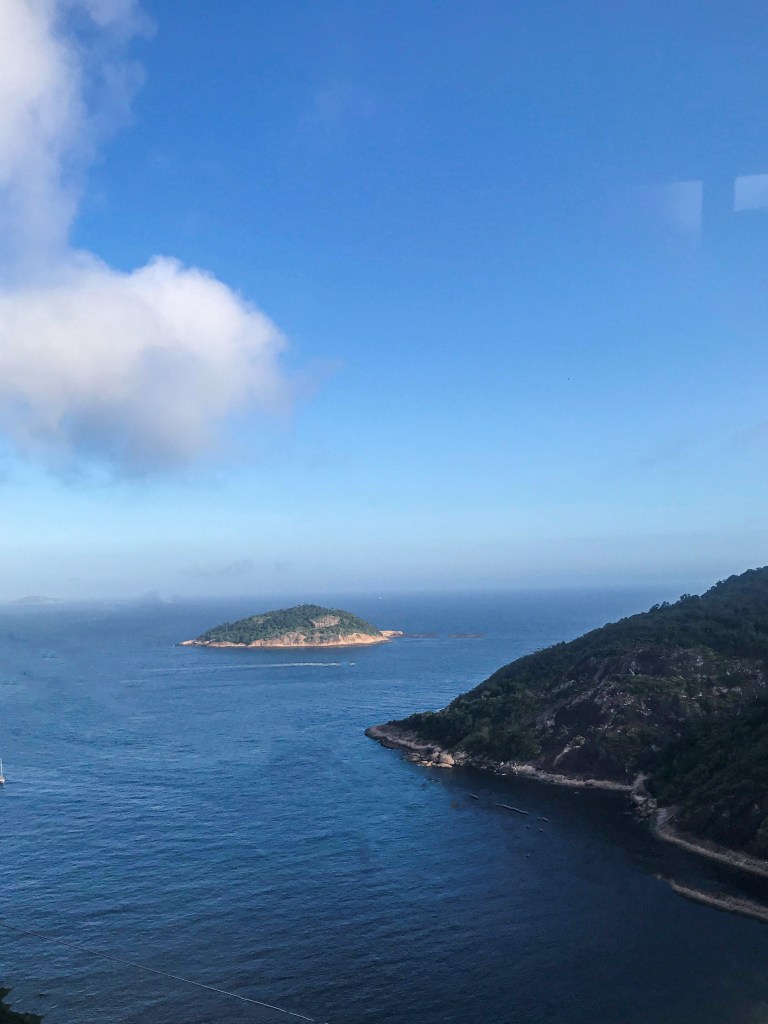
And then there’s the scenery. Rio is breathtakingly picturesque. Stand facing the ocean, turn slowly in a full circle, and it feels like you’re in the center of a natural amphitheater. You’ll see the ocean dotted with islands, then the view transitions into mountains rising behind you, curving back down into more peaks as you complete the circle. It’s a sight you have to experience to believe.
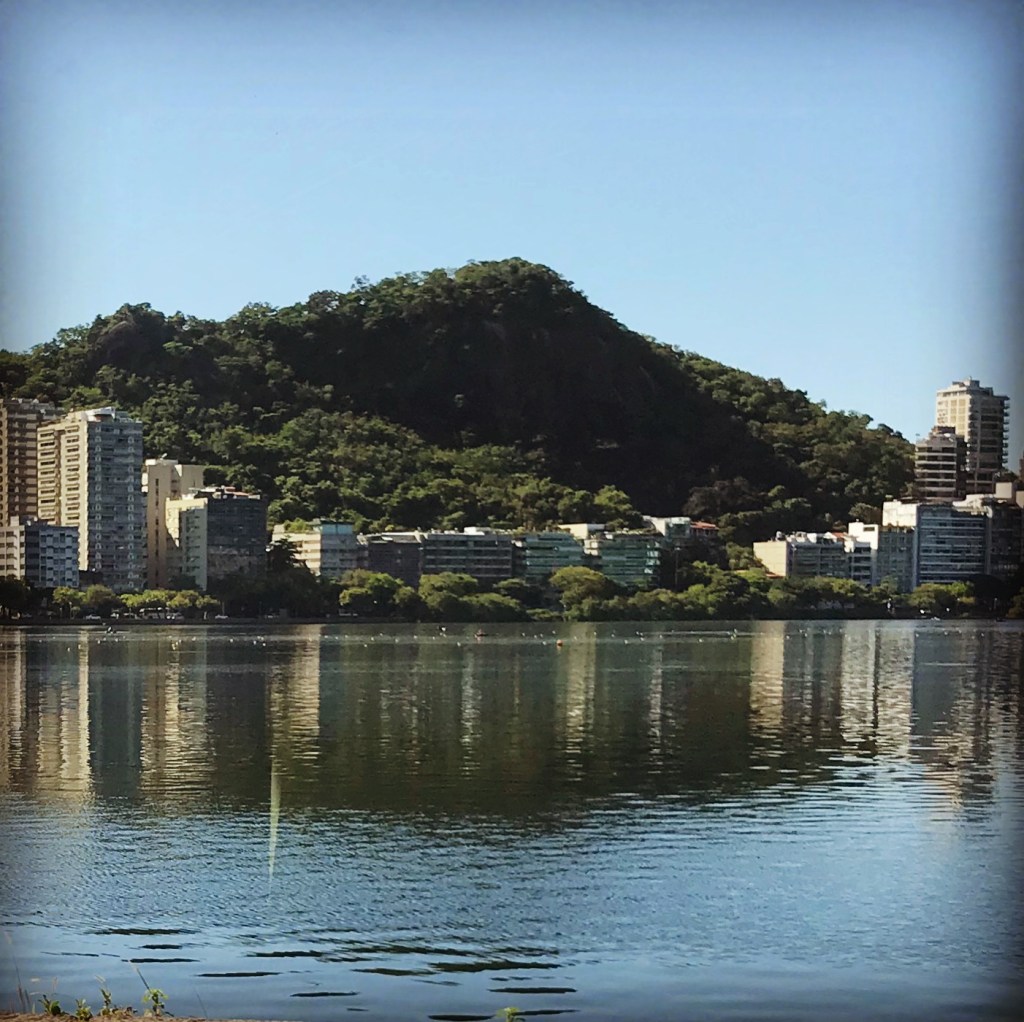
Here’s a little bonus: climb to the top of a tall building—say 15 floors or more—and look down. You won’t see streets. Instead, you’ll see a canopy of trees. Brazilians have a way of weaving nature into urban life, and in my neighborhood, every street is lined with greenery. From above, it looks like a city hidden in a forest, with buildings rising out of paths of trees. Many residents even keep plants on their balconies, adding to the lush, green feel.
The Sad Reality
Like any big city, Rio has its harder side. Poverty here is very real, and in many cases, it’s far more severe than what I was accustomed to seeing in the United States. To put it in perspective—not to minimize the challenges back home—but many people living in poverty in the U.S. would be considered relatively well‑off compared to some of the situations I’ve witnessed here.
It’s not uncommon to be approached by someone asking for food. These moments are difficult: it’s heartbreaking to see hunger up close, and even harder to say no. Yet the reality is that you can’t buy food for everyone. It’s a constant reminder of the inequality that exists alongside the beauty of the city.
Closing Thoughts
To bring this first post to a close, let me share the overall feeling of being here. The people of Rio are warm, engaging, and genuinely friendly. Life moves at a slower, more relaxed pace, and there’s a contagious joy in the way Brazilians embrace everyday moments.
The city itself offers everything you could imagine. What makes it especially fun is how much more engaging it feels to experience Rio on foot—walking through neighborhoods, stopping at cafés, and soaking in the atmosphere—rather than always relying on a car. You’ll never run out of things to do, see, eat, or experience.
From here, each new post will dive into specific aspects of life in Brazil: the food, the different ways of getting around (on foot, by car, taxi, Uber, or public transportation), shopping, beaches, living spaces, and even the costs of goods and services. Rio is a fabulous place to live and to visit, and I’m excited to share more of its stories with
 beingkevin.com
Leave a comment