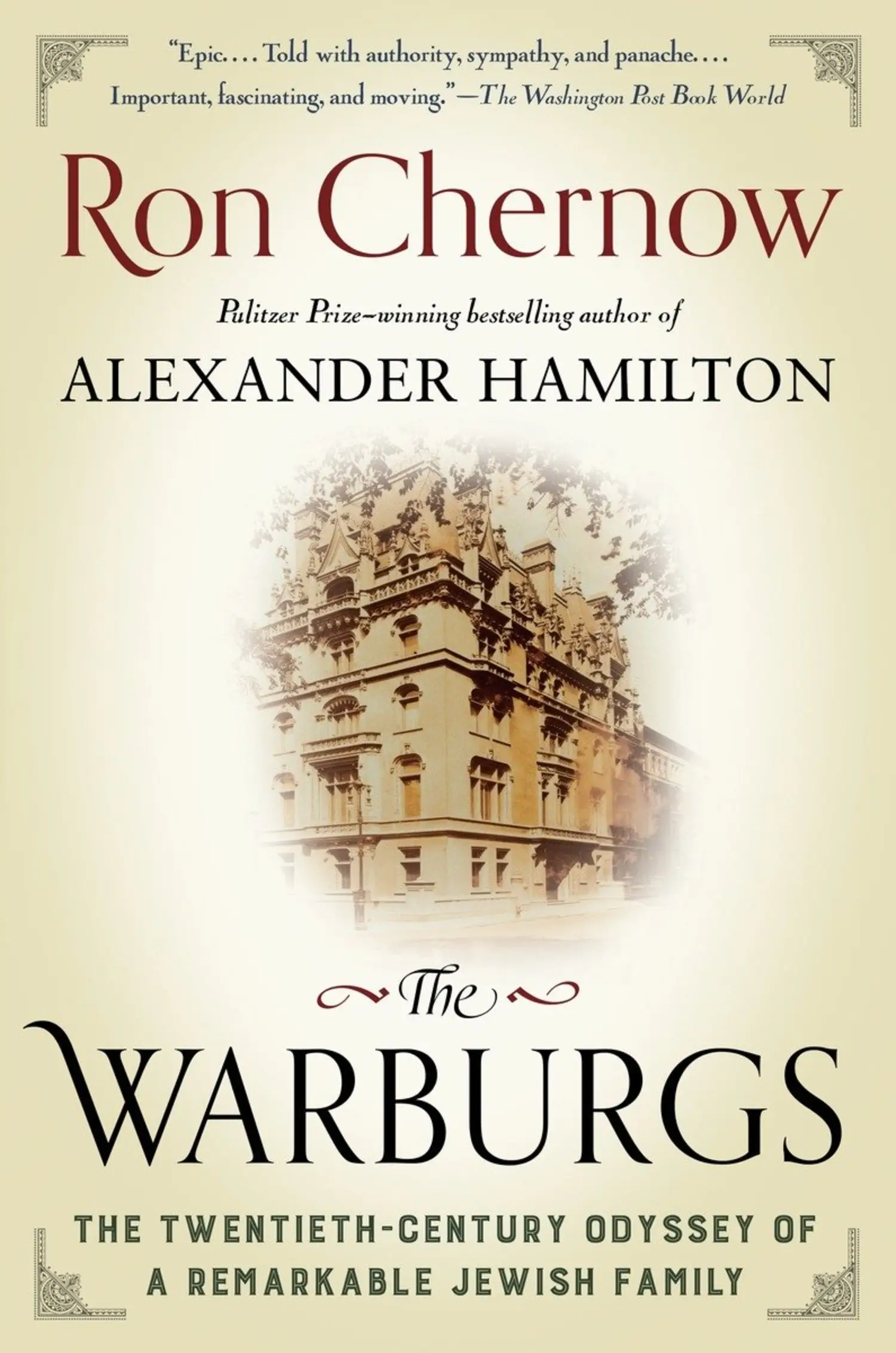
Book Review: The Warburgs: The Banking Dynasty That Shaped Modern Finance — and Lived Through the Century’s Darkest Storms
Ron Chernow
Rating: ⭐⭐⭐⭐⭐ (5/5)
Some dynasties ruled kingdoms, but the Warburgs ruled the capital, shaping economies and societies with their financial acumen.
The Warburgs ruled the capital.
Chernow’s The Warburgs tells the story of a Jewish banking family whose influence stretched from Hamburg to Wall Street, the Kaiser’s court to the Roosevelt administration, and from the birth of modern central banking to New York’s cultural institutions. Their story is one of brilliance and contradiction—loving Germany as it turned against them, rejecting Zionism yet supporting the creation of a Jewish homeland, and producing both financial titans and an intellectually fragile genius who built a renowned library. The Warburg saga is more than a family history; it is a mirror of the 20th century itself.
🌍 A Family Rooted in Germany — Proud, Patriotic, and Deeply Assimilated
The Warburgs were not outsiders in Germany. They were German Jews who saw themselves as fully German, woven into Hamburg’s cultural and civic fabric. Their bank, M.M. Warburg & Co., founded in 1798, became one of Germany’s leading financial institutions.
By the late 19th century, the family led German Jewish society—advising the Kaiser, funding industry, and shaping policy. They were strong anti‑Zionists.
Max and others believed Jews should remain and thrive in Germany as equal citizens, not form a separate nation. They viewed Zionism as a step back from their cosmopolitan ideals. Yet, in one of history’s great ironies, the Warburgs later spent millions supporting Jewish settlement in Palestine, helping create Israel’s infrastructure—driven not by ideology, but humanitarian duty as Hitler rose.
🧠 Aby Warburg: The Brilliant, Troubled Brother Who Built a Cultural Empire
Not every Warburg entered banking. Aby Warburg, the eldest, suffered severe psychological issues—anxiety, depression, and what is now seen as bipolar disorder. He rejected the bank and devoted himself to art history and symbolism.
Using family wealth, Aby built the Kulturwissenschaftliche Bibliothek Warburg, a major research library on the history of ideas. After the Nazi rise, it moved to London as the Warburg Institute, a leading center for cultural and intellectual history. This was the family at their best: turning private wealth into public knowledge.
🇺🇸 Paul and Felix Warburg: The Brothers Who Brought the Dynasty to America
Two of the five famous Warburg brothers—Paul and Felix—emigrated to the U.S., becoming pillars of the American branch.
Paul Warburg: Architect of the Federal Reserve
Paul Warburg was the main architect of the U.S. Federal Reserve System, established in 1913. As Vice Chairman of the first Federal Reserve Board, he helped shape the central banking model that governs U.S. monetary policy. He is often called “the father of the Federal Reserve.”
Felix Warburg: Philanthropist and Civic Leader
Felix became a leader in New York banking and philanthropy, supporting the Met, Jewish charities, and education. His Manhattan mansion became the Jewish Museum. Together, Paul and Felix blended European sophistication with American energy, helping make Wall Street a global center.
💼 Max Warburg and the German Branch: Loyalty, Danger, and Survival
While Paul and Felix built American lives, Max Warburg stayed in Germany—even as Hitler rose. Max loved Germany and believed Jews and non‑Jews could coexist. He advised the government, served on the Reichsbank, and tried to maintain the family’s position as antisemitism intensified.
But by the late 1930s, it became clear that no amount of patriotism could protect the Warburgs.
Max eventually fled, but not before helping thousands of Jews escape—demonstrating tragic loyalty as he believed in Germany long after Germany stopped believing in him.
There were also three daughters who, although not involved in banking and finance, each played an important role within the family.
Frieda Schiff Warburg (Felix Warburg’s wife)
Frieda Schiff Warburg was not a Warburg by birth, but through marriage became one of the most influential women in the extended Warburg family. She was the daughter of Jacob Schiff, the head of Kuhn, Loeb & Co., and a major figure in American Jewish philanthropy.
Key points from the search results:
• Born in New York City in 1876 to Jacob Schiff and Therese Loeb
• Married Felix Warburg, becoming a central figure in New York’s German‑Jewish elite
• Major philanthropist:
• President of the Young Women’s Hebrew Association (1928–1938)
• Honorary chairman of Hadassah’s hospital campaign in Jerusalem
• Donated $500,000 to the Visiting Nurse Service of New York (1924)
• Donated her Fifth Avenue mansion to create The Jewish Museum (opened 1947)
• Supported development in Israel despite not being a Zionist herself
She became one of the most influential Jewish philanthropists of the early 20th century.
Ingrid Warburg Spinelli (Daughter of Anna & Fritz Warburg)
Ingrid Warburg Spinelli was a German‑Jewish philanthropist, antifascist, and intellectual.
Key points:
• Born in Hamburg in 1910, the eldest daughter of Anna and Fritz Warburg
• Educated in Stockholm, Hamburg, and Heidelberg; studied literature, philosophy, and
political theory
• Deeply engaged in anti‑fascist and socialist circles
• Connected with major intellectuals:
• Karl Jaspers
• Ernst Cassirer
• Erwin Panofsky
• Chaim Weizmann
• Isaiah Berlin
• Emigrated to New York in 1936 to stay with her uncle Felix Warburg
• Played a major role in refugee education and support for Jewish children fleeing Nazism
Lola Hahn‑Warburg (Daughter of Max Warburg)
Lola Hahn‑Warburg, a humanitarian, played a major role in the Kindertransport rescue.
Key points:
• Born in 1901, daughter of Max Warburg, the head of M.M. Warburg & Co. in Hamburg
• Fled Germany in 1938 with her husband and children
• Joined the Central British Fund and became a key figure in the Kindertransport, rescuing
Jewish children from Nazi Europe
• Worked at the Windermere reception center for child survivors
• Continued rescue work later in life, including helping children escape Iran and Ethiopia
💷 Siegmund Warburg: The European Cousin Who Built a New Financial Empire
On the other side of the family tree, Siegmund George Warburg, Max’s nephew, fled Nazi Germany and rebuilt his life in London. There, he founded S.G. Warburg & Co., which became one of Europe’s most prestigious merchant banks. Siegmund was a financial innovator — pioneering the Eurobond market and helping London regain its status as a global financial hub.
He rivaled the Rothschilds in influence after World War II. The Warburgs had become a global dynasty.
🕍 Identity, Antisemitism, and the Burden of Prominence
The Warburgs’ success made them targets: facing antisemitism in Germany, conspiracy theories in America, and suspicion from both the left and right. Their prominence fed myths of “Jewish bankers controlling the world,” which Chernow dismantles with nuance and historical clarity. The family walked a tightrope between assimilation and identity—proud Germans, proud Jews, and perpetual outsiders.
🎭 Philanthropy, Culture, and Civic Life
Across generations, the Warburgs poured their wealth into:
- museums
- libraries
- universities
- refugee aid
- medical research
- the arts
- Jewish communal institutions
From the Warburg Institute in London to the Jewish Museum in New York, their cultural legacy is vast. They were not just bankers but builders of civil society.
🏁 Conclusion: A Family That Shaped the Modern World
The Warburgs were:
- German patriots
- Jewish philanthropists
- global financiers
- cultural patrons
- victims of antisemitism
- architects of modern banking
They built one of Europe’s great banks, helped design the U.S. Federal Reserve, rivaled the Rothschilds, and created institutions that still shape cultural and intellectual life.
Their story blends brilliance and tragedy, loyalty and exile, power and vulnerability—a reminder that even the most successful families are shaped by history.
Chernow’s The Warburgs captures this odyssey with depth and humanity, showing how one family’s journey mirrors the upheavals of the 20th century.
Thanks for reading BeingKevin.
In a world built on scrolling past everything in seconds, I genuinely appreciate you stopping here for a moment. If the post gave you something to think about, made you laugh, or even made you disagree, I’d love to hear from you in the comments. A quick rating helps, too, and goes a long way toward supporting the site. And if you’d like to help keep BeingKevin going, a small tip is always appreciated — never expected, but deeply valued. Thanks again for being here
Book Review: The Warburgs: The Banking Dynasty That Shaped Modern Finance — and Lived Through the Century’s Darkest Storms
Ron Chernow
Rating: ⭐⭐⭐⭐⭐ (5/5)
Some dynasties ruled kingdoms, but the Warburgs ruled the capital, shaping economies and societies with their financial acumen.
The Warburgs ruled the capital.
Chernow’s The Warburgs tells the story of a Jewish banking family whose influence stretched from Hamburg to Wall Street, the Kaiser’s court to the Roosevelt administration, and from the birth of modern central banking to New York’s cultural institutions. Their story is one of brilliance and contradiction—loving Germany as it turned against them, rejecting Zionism yet supporting the creation of a Jewish homeland, and producing both financial titans and an intellectually fragile genius who built a renowned library. The Warburg saga is more than a family history; it is a mirror of the 20th century itself.
🌍 A Family Rooted in Germany — Proud, Patriotic, and Deeply Assimilated
The Warburgs were not outsiders in Germany. They were German Jews who saw themselves as fully German, woven into Hamburg’s cultural and civic fabric. Their bank, M.M. Warburg & Co., founded in 1798, became one of Germany’s leading financial institutions.
By the late 19th century, the family led German Jewish society—advising the Kaiser, funding industry, and shaping policy. They were strong anti‑Zionists.
Max and others believed Jews should remain and thrive in Germany as equal citizens, not form a separate nation. They viewed Zionism as a step back from their cosmopolitan ideals. Yet, in one of history’s great ironies, the Warburgs later spent millions supporting Jewish settlement in Palestine, helping create Israel’s infrastructure—driven not by ideology, but humanitarian duty as Hitler rose.
🧠 Aby Warburg: The Brilliant, Troubled Brother Who Built a Cultural Empire
Not every Warburg entered banking. Aby Warburg, the eldest, suffered severe psychological issues—anxiety, depression, and what is now seen as bipolar disorder. He rejected the bank and devoted himself to art history and symbolism.
Using family wealth, Aby built the Kulturwissenschaftliche Bibliothek Warburg, a major research library on the history of ideas. After the Nazi rise, it moved to London as the Warburg Institute, a leading center for cultural and intellectual history. This was the family at their best: turning private wealth into public knowledge.
🇺🇸 Paul and Felix Warburg: The Brothers Who Brought the Dynasty to America
Two of the five famous Warburg brothers—Paul and Felix—emigrated to the U.S., becoming pillars of the American branch.
Paul Warburg: Architect of the Federal Reserve
Paul Warburg was the main architect of the U.S. Federal Reserve System, established in 1913. As Vice Chairman of the first Federal Reserve Board, he helped shape the central banking model that governs U.S. monetary policy. He is often called “the father of the Federal Reserve.”
Felix Warburg: Philanthropist and Civic Leader
Felix became a leader in New York banking and philanthropy, supporting the Met, Jewish charities, and education. His Manhattan mansion became the Jewish Museum. Together, Paul and Felix blended European sophistication with American energy, helping make Wall Street a global center.
💼 Max Warburg and the German Branch: Loyalty, Danger, and Survival
While Paul and Felix built American lives, Max Warburg stayed in Germany—even as Hitler rose. Max loved Germany and believed Jews and non‑Jews could coexist. He advised the government, served on the Reichsbank, and tried to maintain the family’s position as antisemitism intensified.
But by the late 1930s, it became clear that no amount of patriotism could protect the Warburgs.
Max eventually fled, but not before helping thousands of Jews escape—demonstrating tragic loyalty as he believed in Germany long after Germany stopped believing in him.
There were also three daughters who, although not involved in banking and finance, each played an important role within the family.
Frieda Schiff Warburg (Felix Warburg’s wife)
Frieda Schiff Warburg was not a Warburg by birth, but through marriage became one of the most influential women in the extended Warburg family. She was the daughter of Jacob Schiff, the head of Kuhn, Loeb & Co., and a major figure in American Jewish philanthropy.
Key points from the search results:
• Born in New York City in 1876 to Jacob Schiff and Therese Loeb
• Married Felix Warburg, becoming a central figure in New York’s German‑Jewish elite
• Major philanthropist:
• President of the Young Women’s Hebrew Association (1928–1938)
• Honorary chairman of Hadassah’s hospital campaign in Jerusalem
• Donated $500,000 to the Visiting Nurse Service of New York (1924)
• Donated her Fifth Avenue mansion to create The Jewish Museum (opened 1947)
• Supported development in Israel despite not being a Zionist herself
She became one of the most influential Jewish philanthropists of the early 20th century.
Ingrid Warburg Spinelli (Daughter of Anna & Fritz Warburg)
Ingrid Warburg Spinelli was a German‑Jewish philanthropist, antifascist, and intellectual.
Key points:
• Born in Hamburg in 1910, the eldest daughter of Anna and Fritz Warburg
• Educated in Stockholm, Hamburg, and Heidelberg; studied literature, philosophy, and
political theory
• Deeply engaged in anti‑fascist and socialist circles
• Connected with major intellectuals:
• Karl Jaspers
• Ernst Cassirer
• Erwin Panofsky
• Chaim Weizmann
• Isaiah Berlin
• Emigrated to New York in 1936 to stay with her uncle Felix Warburg
• Played a major role in refugee education and support for Jewish children fleeing Nazism
Lola Hahn‑Warburg (Daughter of Max Warburg)
Lola Hahn‑Warburg, a humanitarian, played a major role in the Kindertransport rescue.
Key points:
• Born in 1901, daughter of Max Warburg, the head of M.M. Warburg & Co. in Hamburg
• Fled Germany in 1938 with her husband and children
• Joined the Central British Fund and became a key figure in the Kindertransport, rescuing
Jewish children from Nazi Europe
• Worked at the Windermere reception center for child survivors
• Continued rescue work later in life, including helping children escape Iran and Ethiopia
💷 Siegmund Warburg: The European Cousin Who Built a New Financial Empire
On the other side of the family tree, Siegmund George Warburg, Max’s nephew, fled Nazi Germany and rebuilt his life in London. There, he founded S.G. Warburg & Co., which became one of Europe’s most prestigious merchant banks. Siegmund was a financial innovator — pioneering the Eurobond market and helping London regain its status as a global financial hub.
He rivaled the Rothschilds in influence after World War II. The Warburgs had become a global dynasty.
🕍 Identity, Antisemitism, and the Burden of Prominence
The Warburgs’ success made them targets: facing antisemitism in Germany, conspiracy theories in America, and suspicion from both the left and right. Their prominence fed myths of “Jewish bankers controlling the world,” which Chernow dismantles with nuance and historical clarity. The family walked a tightrope between assimilation and identity—proud Germans, proud Jews, and perpetual outsiders.
🎭 Philanthropy, Culture, and Civic Life
Across generations, the Warburgs poured their wealth into:
- museums
- libraries
- universities
- refugee aid
- medical research
- the arts
- Jewish communal institutions
From the Warburg Institute in London to the Jewish Museum in New York, their cultural legacy is vast. They were not just bankers but builders of civil society.
🏁 Conclusion: A Family That Shaped the Modern World
The Warburgs were:
- German patriots
- Jewish philanthropists
- global financiers
- cultural patrons
- victims of antisemitism
- architects of modern banking
They built one of Europe’s great banks, helped design the U.S. Federal Reserve, rivaled the Rothschilds, and created institutions that still shape cultural and intellectual life.
Their story blends brilliance and tragedy, loyalty and exile, power and vulnerability—a reminder that even the most successful families are shaped by history.
Chernow’s The Warburgs captures this odyssey with depth and humanity, showing how one family’s journey mirrors the upheavals of the 20th century.
Thanks for reading BeingKevin.
In a world built on scrolling past everything in seconds, I genuinely appreciate you stopping here for a moment. If the post gave you something to think about, made you laugh, or even made you disagree, I’d love to hear from you in the comments. A quick rating helps, too, and goes a long way toward supporting the site. And if you’d like to help keep BeingKevin going, a small tip is always appreciated — never expected, but deeply valued. Thanks again for being here
Thanks for reading BeingKevin.
In a world built on scrolling past everything in seconds, I genuinely appreciate you stopping here for a moment. If the post gave you something to think about, made you laugh, or even made you disagree, I’d love to hear from you in the comments. A quick rating helps, too, and goes a long way toward supporting the site. And if you’d like to help keep BeingKevin going, a small tip is always appreciated — never expected, but deeply valued. Thanks again for being here
Leave a Reply