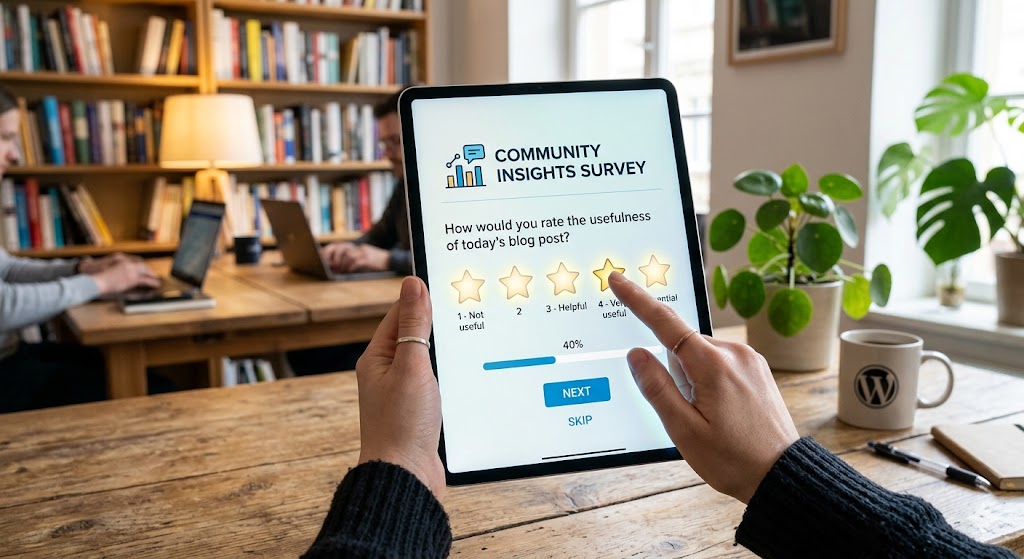
I will be posting this daily for a week. Here is my first 24-hour data update. I’m trying to gather data for a blogging analysis project. I would appreciate the help with the poll listed below. Also, how would you rate this post? Here is the data from the first 24 hours. If you already participated, please do NOT answer the poll again. Thank You.
4/29 Published
17 views
7 likes
2 ratings
3 comments
We all like to think we engage thoughtfully with the content we read online, but do we, really?
If you’re anything like most readers, your interaction with a blog post probably depends on your mood, your time, and how quickly the content hooks you. Some posts grab you instantly. Others lose you halfway through. And sometimes, even when you do read something all the way through, you quietly move on without leaving any trace behind. I will have some early analysis later this week that I already did, and I’m finalizing that post. This is to help dig a bit deeper.
That’s what I want to explore here, not in theory, but in reality.
The Question Behind the Question
Content creators spend hours writing, editing, and shaping posts. But what actually happens on the other side of the screen? Are readers deeply engaged, or just skimming? Are they reacting, or staying silent?
Let’s get honest about it.
Quick Poll
Take a second and answer what actually reflects your behavior:
Please take the poll
No judgment, just patterns.
Why This Matters
Engagement shapes everything:
- What content gets created
- What gets visibility
- What feels worth the effort to write
A post with no comments can still be widely read. A post with lots of likes might not have been fully read. And sometimes the most impactful posts get the least visible feedback.
So the question isn’t just what you do—it’s why you do it.
Your Turn
For this post, try something different:
- Rate the Post 1-5 stars listed below
- Leave a comment answering the poll honestly
- Add a sentence or two explaining why you interact with posts the way you do
Even a short response helps paint a clearer picture of how people actually engage.
Because the gap between what we think readers do—and what they really do—is where things get interesting.
Let’s see what the reality looks like.


Leave a Reply